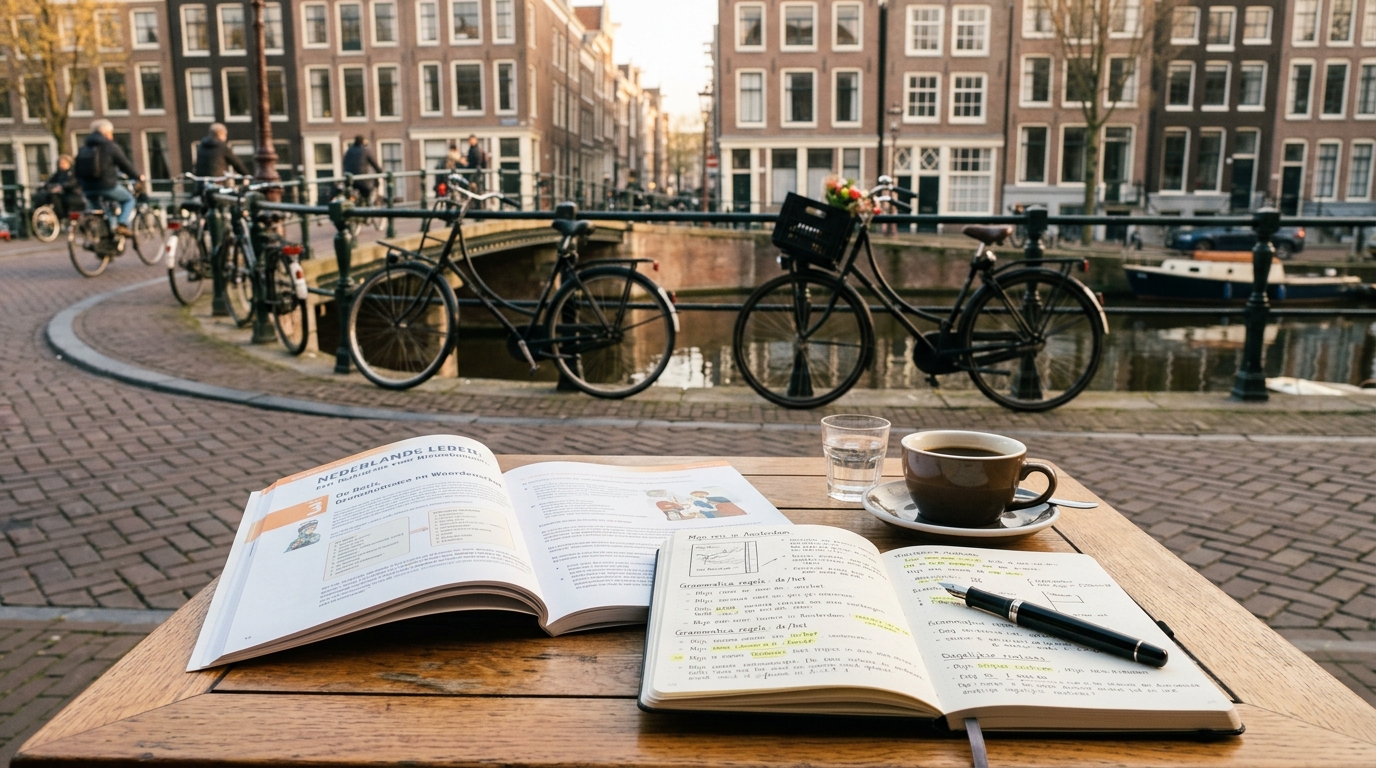
When I first relocated from Indonesia to the Netherlands, I was often comforted by the well-known statistic that over 90% of the Dutch population speaks fluent English. In international business, academic halls, and airport terminals, English is effortless. However, as the initial novelty of arrival subsided, the reality of settling down in Nieuwegein and Utrecht made something abundantly clear: learning Dutch is not merely a cultural hobby; it is a fundamental pillar of personal independence, community belonging, and daily dignity.
The Reality of Relocation: Beyond English Comfort Zones
Living in a foreign country as a resident is vastly different from visiting as a tourist. The moment you register at the Gemeente and receive your Burgersevice Nummer (BSN), the correspondence begins. Official letters arrive in blue envelopes from the Belastingdienst, municipality waste calendars are printed in Dutch, health insurance and DigiD portals default to Dutch, and your neighborhood WhatsApp group discusses street maintenance in Dutch. Relying entirely on Google Translate or asking Dutch colleagues to decode every letter quickly becomes exhausting. Speaking the local language is your bridge to true self-reliance.
"Learning Dutch as a newcomer is about agency. When you understand the letters arriving in your mailbox and can converse with the postman or pharmacist, you transition from being an observer to an active member of society."
Language in Layers: Curiosity, Consistency, and Courage
Language acquisition is rarely linear; it comes in progressive layers. One of the most common obstacles international newcomers face is the notorious Dutch reflex to instantly switch to English the second they detect a foreign accent or hesitant pause. Dutch people do this out of courtesy and efficiency, not hostility. Overcoming this requires polite persistence. A friendly phrase like 'Mag ik het in het Nederlands proberen? Ik wil graag oefenen' (May I try in Dutch? I would like to practice) works wonders and is invariably met with warm appreciation and patience.
1. Beginner-Friendly Anchors & Audio Immersion
Starting with overwhelming grammar manuals can crush motivation early. Begin with accessible, structured anchors:
- Learndutch.org & 1000 Most Common Words: Build immediate functional vocabulary with high-frequency word lists and pronunciation videos.
- Children's Programming (Het Klokhuis & Jeugdjournaal): Excellent visual storytelling that explains science, history, and current affairs in articulate, accessible Dutch without adult slang.
- Public Broadcasting (NPO 1, 2, 3 with Dutch Subtitles): Turn on Teletext 888 or Dutch CC to connect auditory speech with written spelling during news and talk shows.
- Slow Podcasts & Dutch Music: Podcasts like 'Slow Dutch Podcast by JeDutchy' and melodious Dutch songs help train your ear to the unique cadence and diphthongs (such as 'ui', 'eu', and 'ij').
2. The Living Environment: Cafés, Markets, and Libraries
Language is lived in the physical community. The local public library (Bibliotheek) is one of the most underutilized treasures in the Netherlands. Most branches host free weekly 'Taalcafés' (Language Cafés) where volunteers and newcomers meet for informal conversation. Likewise, speaking Dutch at the Saturday open-air market, the bakery, or when cycling through town grounds your vocabulary in authentic social memory.
3. Official Milestones: The Staatsexamen NT2
For professionals and students intending to build long-term careers, pursue accredited university programs, or fulfill civic integration (inburgering) requirements, working toward the Staatsexamen NT2 (Nederlands als Tweede Taal) or CNaVT provides structured benchmarks. Programma I verifies B1 vocational fluency, while Programma II assesses B2 professional and academic command.
Key Takeaway
Be patient with yourself. Every small milestone—from understanding an announcement at Utrecht Centraal station to having a five-minute chat with your neighbor—reinforces your belonging. Embrace the process with curiosity and good humor.
Access the Complete Article on LinkedIn Pulse
Explore the complete original article, read the full unedited analysis, and access official journalism archives on LinkedIn Pulse.